Why upgrade your Polaris Ranger EV to lithium
A Ranger EV on original lead-acid batteries fights three problems
at once. The pack loses voltage as it discharges, so the vehicle
slows on hills and toward the end of a charge. The batteries need
regular watering and terminal cleaning, and they corrode anyway. And
at roughly 700 pounds, eight lead-acid batteries are dead weight that
eats into range and torque.
A LiFePO4 lithium conversion solves all three. Lithium iron
phosphate holds voltage nearly flat through the discharge curve, so
the Ranger keeps full power and speed until it is nearly empty. There
is no watering, no equalizing and no corrosion. And a single lithium
pack weighs a fraction of the lead-acid bank it replaces, freeing up
payload and improving acceleration and hill climbing.
For farmers, ranchers, property managers and hunting-land owners
who depend on the vehicle every day, the practical result is less
downtime, longer runtime between charges and a battery that lasts
years longer than the pack it replaced.
Benefits of a lithium conversion
- Longer runtime and range. More usable capacity
than lead-acid at the same voltage, with no voltage sag as the pack
drains.
- More torque and better hill climbing. Flat
voltage delivery means full power up grades and under load, not just
on flat ground.
- Maintenance-free. No watering, no equalizing,
no terminal corrosion. Install it and drive.
- Faster charging. LiFePO4 accepts a charge far
faster than lead-acid and does not need a full cycle to stay
healthy.
- Hundreds of pounds lighter. Improves payload,
handling and efficiency.
- Bluetooth monitoring. A smart battery
management system reports state of charge, cell voltage and
temperature to a phone app.
- Longer lifespan. LiFePO4 packs are rated for
thousands of cycles, typically outlasting several lead-acid
replacements.
Why the Ranger EV is not a golf cart
This matters when choosing a battery, because a Ranger EV works far
harder than a golf cart. Towing, plowing, hauling and climbing pull
much more current than cruising a fairway. Ranger EV motors commonly
draw 130 to 150 amps on moderate hills and can peak at 400 to 500 amps
under heavy load.
That makes the battery management system's continuous amp rating as
important as capacity. A battery with plenty of amp-hours but a
conservative BMS can cut out under sustained load. If you tow, plow,
haul or run hills regularly, weigh the discharge rating alongside the
range figure, not just the capacity number.
Featured battery brands
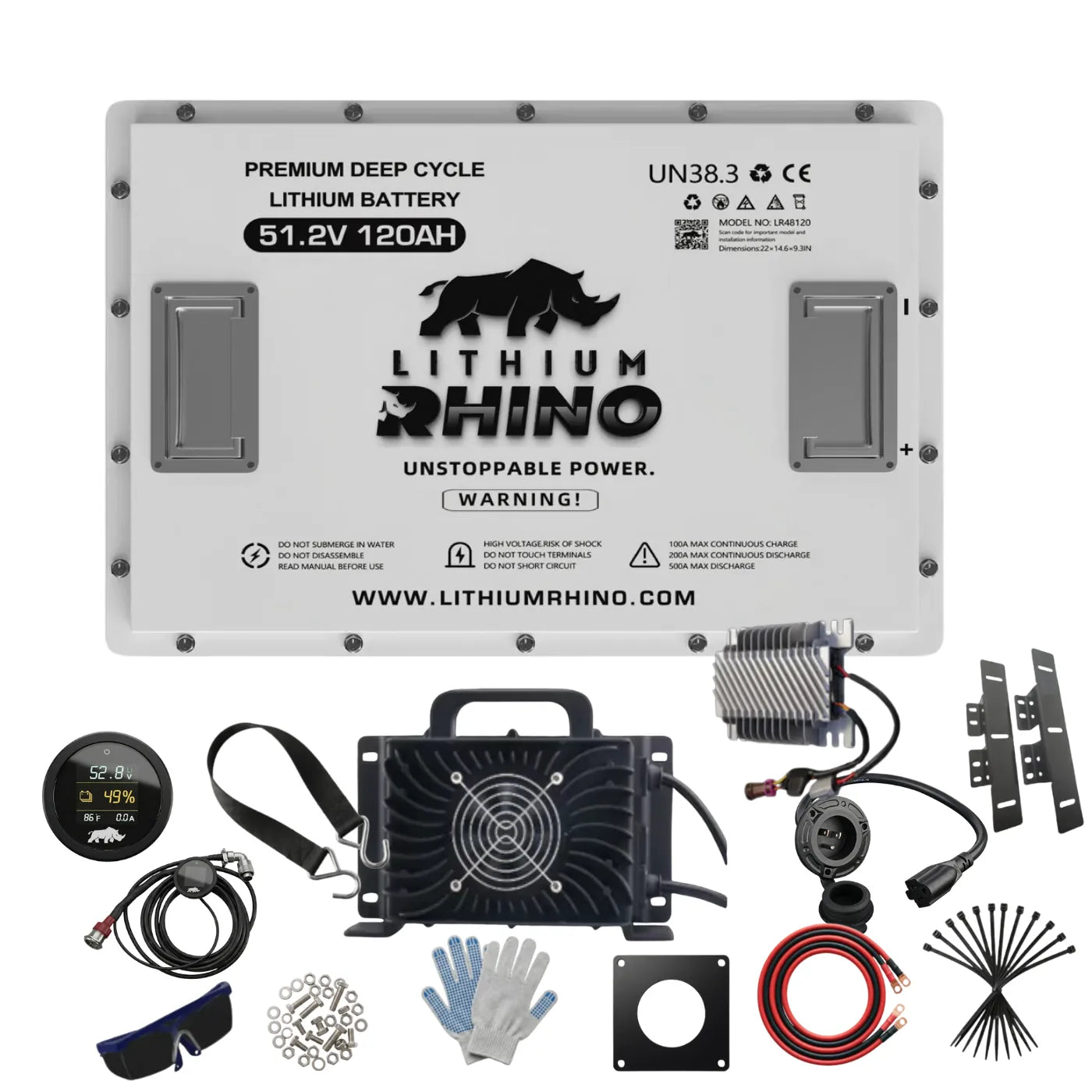
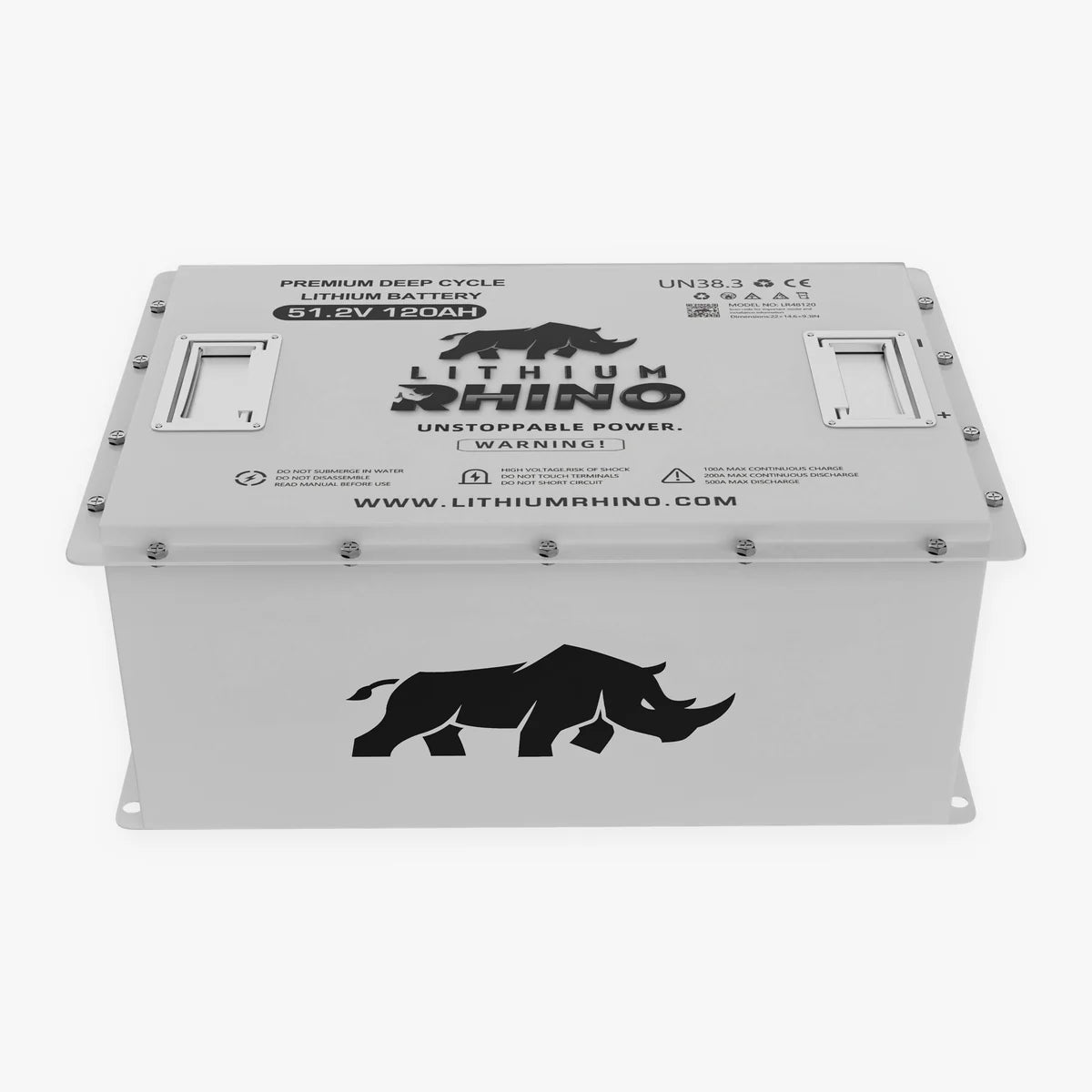
Lithium Rhino
Lithium Rhino builds Ranger EV kits in 120Ah and 170Ah. The 170Ah
is the heavy-duty option Ranger forums cross-shop for towing and
plowing, with a 300A continuous, 800A peak BMS, self-heating built in,
and a gauge that integrates with the Polaris factory dash. Its 8-year
warranty covers cells, BMS and electronics, with full replacement for
the first six years and a $500 deductible in years seven and eight,
backed by lifetime U.S.-based support. Both capacities include a
voltage reducer for 12V accessories.
Bolt Energy
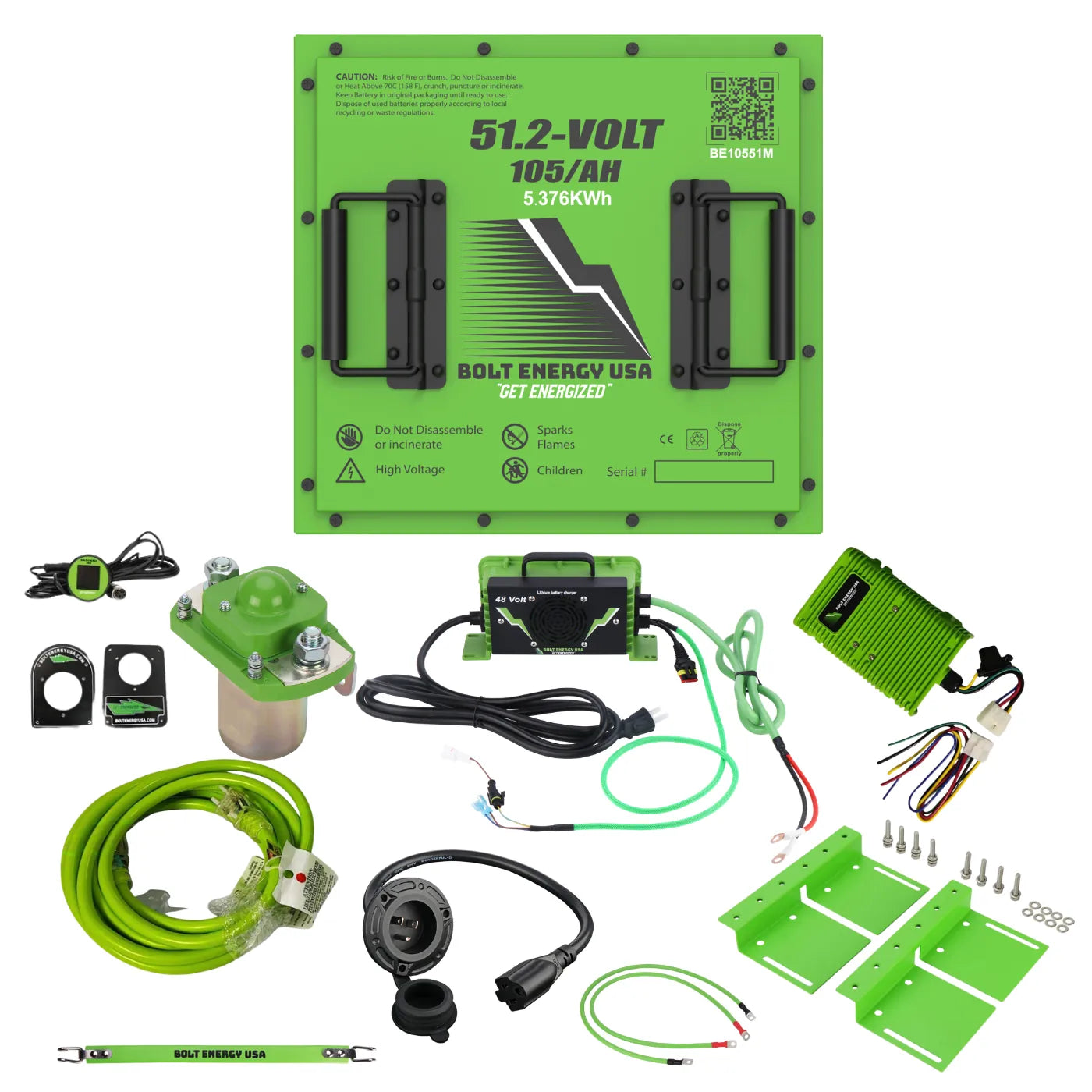
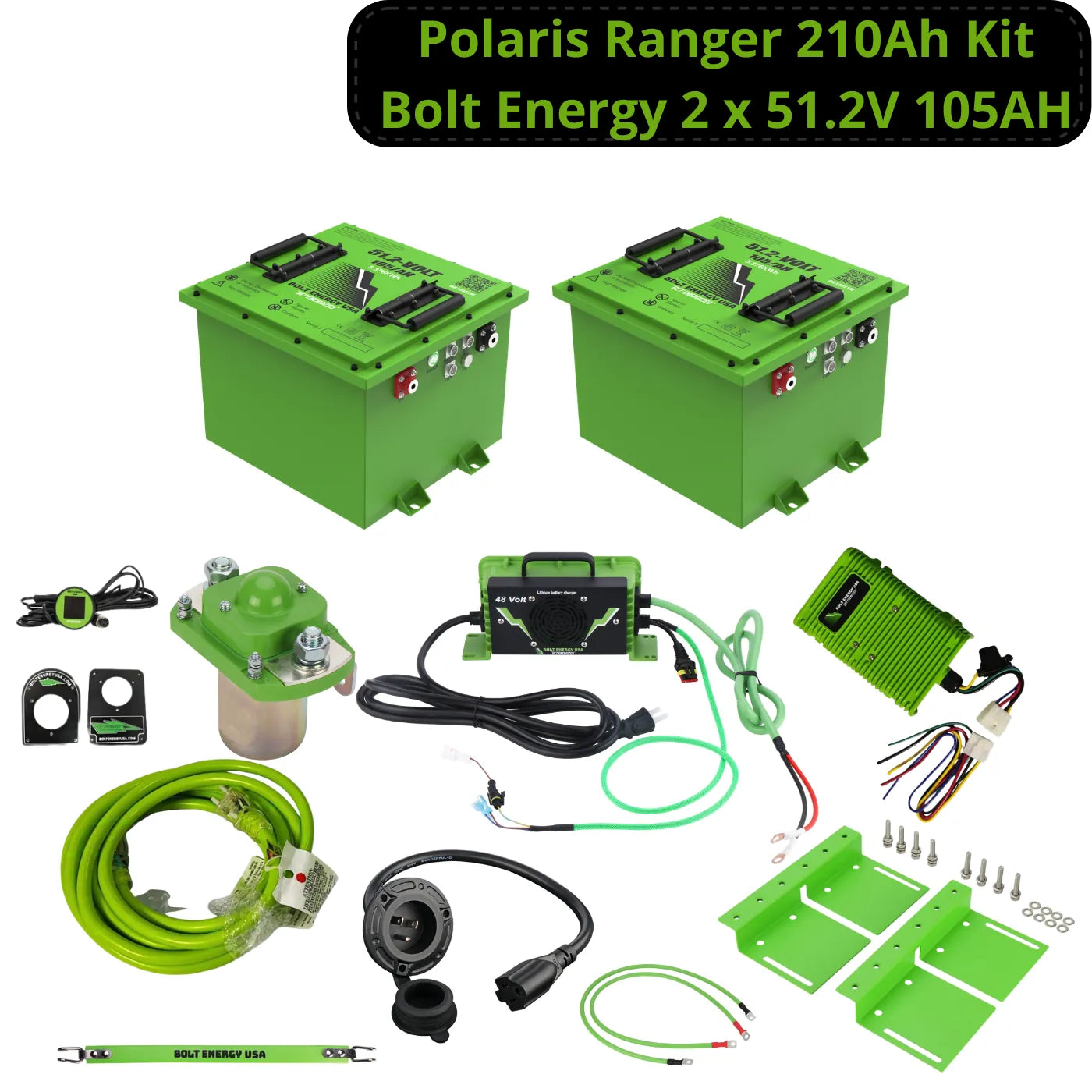
Bolt Energy offers the Ranger EV kit in 105Ah and 210Ah (a dual
105Ah configuration), in standard and heated variants for cold
climates. The slim battery uses a powder-coated steel enclosure rated
IP66, a 250A BMS, Bluetooth and a Smart SOC meter. Bolt carries a
12-year limited manufacturer warranty, the longest of the three, and
every kit includes a voltage reducer.
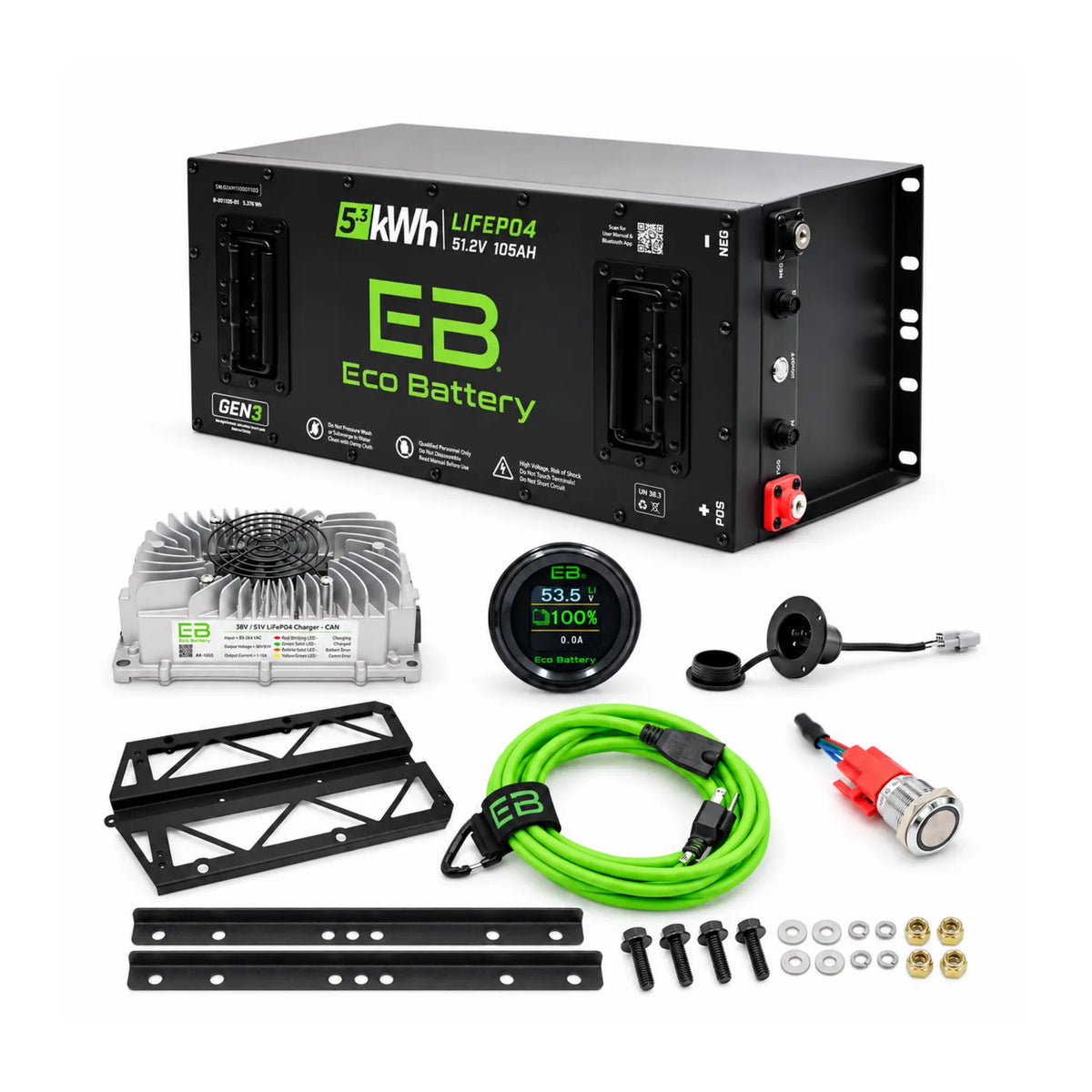
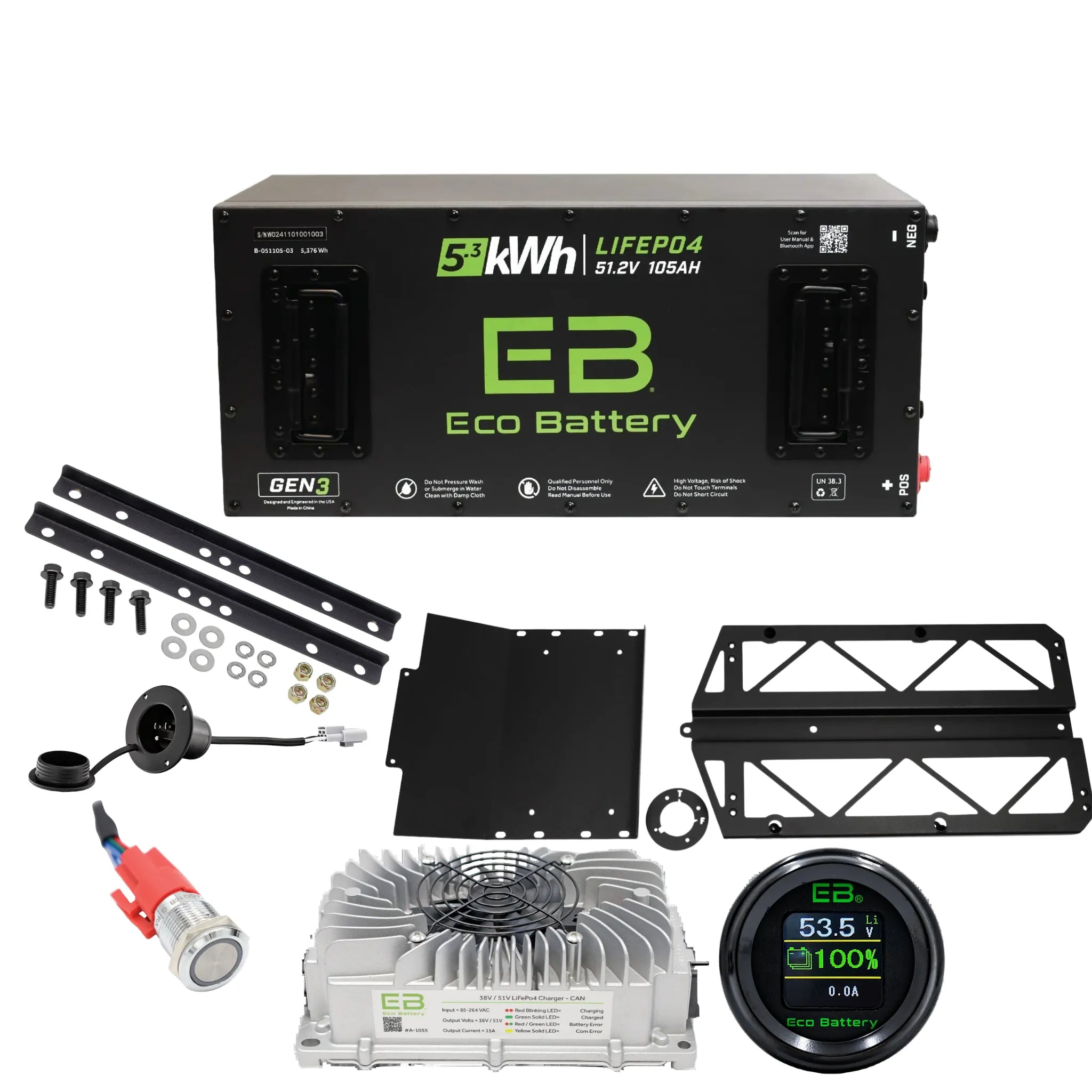
Eco Battery
Eco Battery's GEN3 Ranger EV bundles come in 105Ah, 150Ah and
160Ah. The GEN3 battery management system supports over-the-air
firmware updates through Bluetooth and the Eco Battery app, and the
CAN-enabled charger coordinates charging across the cells. Eco carries
a limited lifetime warranty. Note that Eco Ranger EV bundles do not
include a voltage reducer, so add one if you run 12V accessories.
Brand comparison at a glance
| Feature |
Lithium Rhino |
Bolt Energy |
Eco Battery |
| Warranty | 8 years | 12 years | Limited lifetime |
| Heated option | Built into 170Ah, optional on 120Ah | Yes, heated variants | Not offered on Ranger EV kits |
| Bluetooth app | Yes | Yes | Yes, with over-the-air updates |
| Voltage reducer | Included | Included | Sold separately |
| Charger | Matched lithium charger | 18A smart charger | CAN-enabled charger |
| Peak / continuous BMS | Up to 800A / 300A (170Ah) | 250A BMS | 175A sustained (160Ah) |
| Best for | Value, trail, towing (170Ah) | Cold climates, longest warranty | Range, factory-lithium upgrade |
Which capacity should you choose
Every kit here is 48V nominal, 51.2V actual. Capacity determines
range; the BMS rating determines how hard you can work it. Terrain,
load, tire pressure and driving style all affect real-world range.
| Capacity |
Estimated range |
Ideal user |
| 105Ah |
40–50 miles |
Property maintenance, short daily
rounds, light loads |
| 120Ah |
40–50 miles |
Solo use, trail riding, farm
rounds. 250A continuous, 500A peak |
| 150Ah / 160Ah |
60+ miles |
Full work days, hills, hauling,
all-day hunting |
| 170Ah |
Up to 74 miles |
Towing, plowing, steep terrain,
commercial duty. 300A continuous, 800A peak, self-heating |
| 210Ah |
Highest available |
Maximum range and continuous-duty
commercial and fleet use |
For property maintenance and farm rounds,
105Ah or 120Ah is usually plenty. For hunting land with hills, or a
vehicle that hauls all day, step up to 150Ah or 160Ah. For towing,
plowing or municipal and commercial fleets that run the Ranger hard
from morning to night, the 170Ah and 210Ah are built for it. A larger
pack adds weight and cost, so the biggest option is not automatically
the right one.
What most Ranger EV owners choose
After fitting these kits on a lot of Ranger EVs, a clear pattern
shows up. Most owners land on one of three, depending on how they
use the vehicle:
| Pick |
Kit |
Why owners choose it |
| Most popular |
Bolt Energy 105Ah Heated |
The default choice for owners who work outdoors and
charge in unheated garages or barns through winter. The
heated battery and 12-year warranty are what win people
over. |
| Best for more range |
Eco Battery 160Ah |
The step-up for longer work days, hills and hauling, and
the one to pick if you are replacing a factory lithium pack
and want more range than it gave you. |
| Best value |
Lithium Rhino 120Ah |
Strong capacity, 250A continuous BMS and an included
voltage reducer at a competitive price. A good fit for solo
use, trail riding and property rounds. |
If you tow or plow hard, look past these three at the higher
discharge ratings, such as the Rhino 170Ah or Bolt 210Ah. Not sure
which way to go? Call our team at +1 (786) 321-3526 and we will
match the kit to how you actually use your Ranger.
Choosing by how you use it
Different work pulls different power. Property and grounds crews
doing short daily rounds are well served by 105Ah or 120Ah. Farms and
ranches that haul, spray or run long days lean toward 150Ah or 160Ah.
Hunting-land owners covering rough terrain all day usually want the
extra range of 160Ah. And anyone towing a trailer or running a plow
should prioritize the higher-discharge 170Ah or 210Ah, where the BMS
rating matters as much as the capacity.
Compatible Polaris Ranger EV models
| Model |
Compatible |
Notes |
| Polaris Ranger EV, 2010–2022
(48V lead-acid) |
Yes |
Replaces all eight 6V lead-acid
batteries with one lithium pack |
| Polaris Ranger EV (factory
lithium) |
Yes |
105Ah matches factory performance;
160Ah adds range over the original pack |
| Polaris Ranger XP Kinetic |
No |
High-voltage architecture. No 48V
kit fits it |
| Gas / diesel Ranger (500, 570, XP
900, XP 1000, Crew) |
No |
Uses a 12V starting battery, not a
traction pack |
The most common and most expensive mix-up
on this vehicle is the Ranger XP Kinetic, which looks similar but runs
a completely different high-voltage system. If you are unsure which
vehicle you have, check the VIN plate and call us before ordering.
What's included in a conversion kit
Contents vary by brand, and each product page lists the exact
components. In general, a complete Ranger EV kit includes:
- 51.2V LiFePO4 battery with an integrated smart
battery management system
- Matched lithium charger for the battery
chemistry and capacity
- Voltage reducer / DC converter for 12V
accessories (included with Lithium Rhino and Bolt Energy; sold
separately for Eco Battery)
- Battery gauge / SOC meter showing state of
charge
- Bluetooth monitoring through the manufacturer's
phone app
- Mounting hardware for the Ranger EV battery
bay
- Cabling and installation accessories
Lead-acid vs lithium performance
| |
Lead-acid |
LiFePO4 lithium |
| Weight |
~700 lbs (eight batteries) |
~120 lbs (one pack) |
| Runtime |
Drops as pack ages |
Full usable capacity every cycle |
| Maintenance |
Watering, equalizing, cleaning |
None |
| Charging |
Slow, full cycle needed |
Fast, partial charging fine |
| Voltage stability |
Sags under load and as it drains |
Nearly flat through discharge |
| Acceleration / hills |
Weakens as charge drops |
Consistent to near empty |
| Lifespan |
2–4 years typical |
Thousands of cycles, 10+ years |
Charging your Ranger EV after conversion
The Ranger EV shipped with an onboard Delta Q QuiQ charger set for
lead-acid. That profile is not appropriate for LiFePO4 and cannot be
used as-is. Every kit includes a lithium charger matched to its
battery, and that is the charger to use. Eco Battery and Lithium Rhino
chargers use CAN communication with the BMS so the charger and battery
coordinate charging across the cells.
Frequently asked questions
Explore more
Ready to upgrade your Ranger EV
Browse the kits above and choose the capacity that fits how you use
your Ranger. If you are deciding between two options or want to confirm
fitment for your model year, call our team at +1 (786) 321-3526,
Monday through Friday, 9am to 6pm EST, and we will help you get it
right the first time. Free shipping to the contiguous U.S.