The Bolt Energy 51.2V 105Ah Mini is a single-unit LiFePO4 lithium battery conversion kit designed to replace the eight lead-acid batteries in a Polaris Ranger EV (2010–2022). It weighs 100.8 pounds, delivers 40 to 50 miles of range per charge, and includes a 250-amp BMS, Bluetooth monitoring, IP66-sealed powder-coated steel enclosure, and a 12-year limited warranty. A heated version is available for cold-climate operators.
Lead-acid battery banks wear out every three to five years, lose capacity in heat, and demand regular maintenance that most owners do not have time for. The Bolt Energy 51.2V 105Ah Mini replaces the entire stock battery bank in a Polaris Ranger EV with a single lithium iron phosphate unit that charges faster, holds its charge longer between uses, and eliminates the water-topping and terminal corrosion that come with conventional batteries.
What This Battery Replaces
The stock Polaris Ranger EV runs on eight 12-volt lead-acid batteries wired in series. Together they weigh between 600 and 700 pounds and require periodic watering, equalizing charges, and terminal cleaning. The Bolt Energy Mini replaces all eight with a single unit weighing 100.8 pounds a reduction of 500 or more pounds of dead weight from the front section of the vehicle.
Owners who have made this conversion report that the Ranger EV responds noticeably better on inclines and in 4WD conditions, and that the battery holds a charge after weeks of storage without significant drop something lead-acid banks cannot do reliably once they age past two or three years.
Who This Battery Is For
A strong fit if you
Own a Polaris Ranger EV from 2010 to 2022
Use the vehicle for farm runs, hunting access, property maintenance, or trail riding
Want to eliminate battery maintenance entirely
Store the vehicle for weeks or months between uses
Charge from a standard 110V outlet
Operate in moderate to warm climates, or can provide shore power in winter storage
Consider alternatives if you
Regularly tow at maximum rated capacity on sustained steep grades two units in parallel or the 160Ah version is more appropriate
Store in an unheated space below freezing with no charging source the battery should not be charged below 34F without the heated version
Need more than 50 miles of range per charge under load
LiFePO4 Chemistry Why It Matters
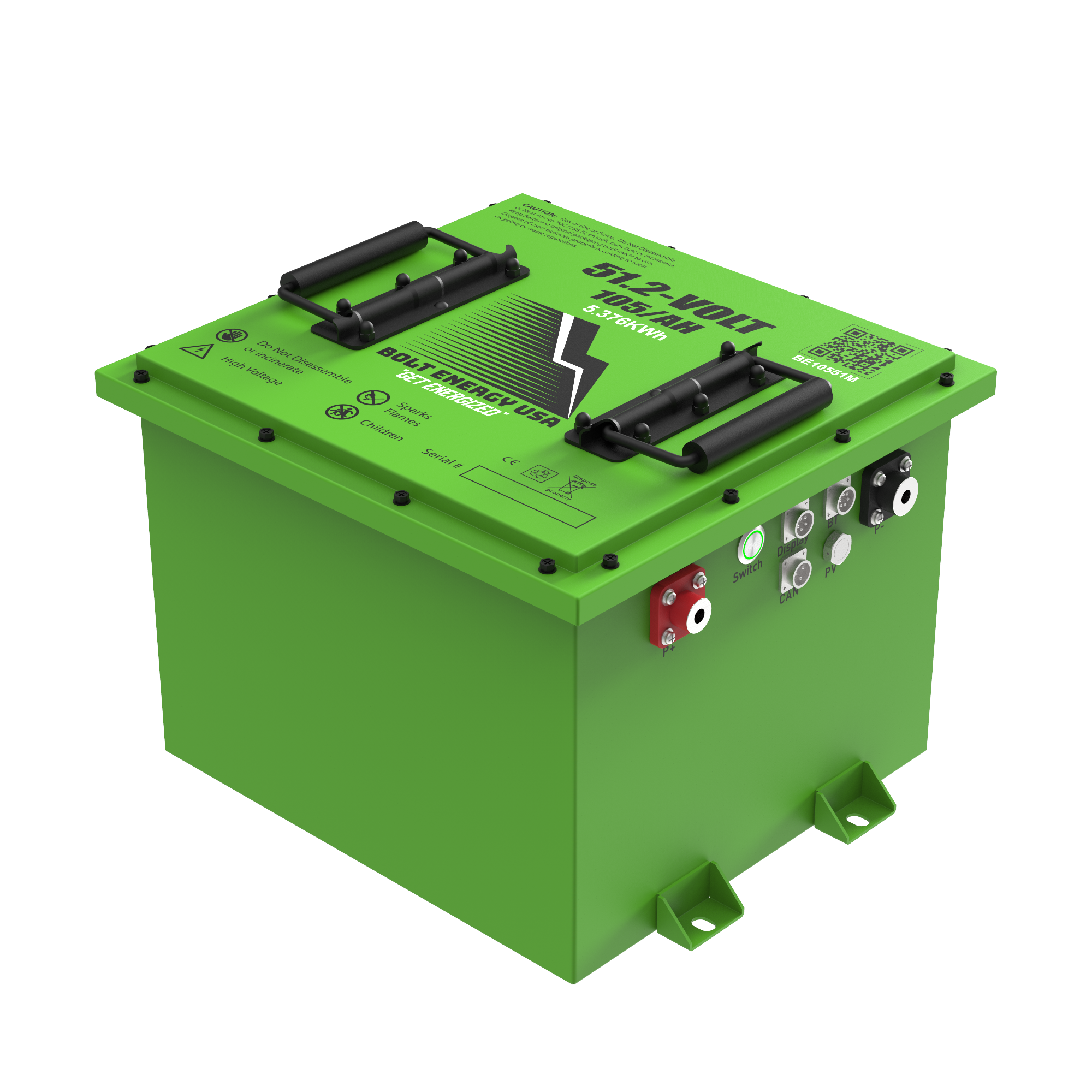
Lithium iron phosphate is a thermally stable lithium chemistry well-suited for this application. Unlike other lithium formulations, LiFePO4 does not enter thermal runaway under overcharge conditions and does not degrade from partial charges the way lead-acid batteries do. The Bolt Energy Mini uses prismatic Grade-A cells in a 1P16S configuration with a built-in 250-amp Battery Management System that protects against overcharge, over-discharge, over-current, short circuit, and temperature extremes without requiring any input from the operator.
Self-discharge is below 3 percent per month, which means a fully charged battery left in storage over a hunting off-season will still hold the majority of its charge when the season begins again.
Warranty
This battery is covered by a 12-year limited warranty from Bolt Energy USA, serviced domestically in Largo, Florida. The battery must be registered within 30 days of purchase to activate full 12-year coverage batteries not registered within that window are limited to 2-year coverage. Years 1 through 6 cover manufacturing defects at no charge. Years 7 through 12 provide prorated replacement based on current pricing at the time of the claim. The warranty is transferable to subsequent owners, who must re-register within 15 days of the ownership change. The included charger carries a 2-year warranty. Cables, SOC meters, solenoids, and voltage reducers carry a 1-year warranty. For full terms and registration instructions, see the Warranty tab or contact us.
Features and Applications
Key Features
250A Continuous BMS
The integrated Battery Management System handles 250 amps of continuous discharge and up to 520 amps peak for 30 seconds. For standard Ranger EV operation on flat to moderate terrain, this covers normal motor demand. For sustained heavy towing on steep grades, two units in parallel are recommended by experienced installers.
IP66 Sealed Enclosure
The powder-coated steel case is built to the IP66 standard, providing protection against dust ingress and high-pressure water jets. This makes it suitable for vehicles that encounter rain, stream crossings, mud spray, and field conditions where a conventional battery would corrode over time.
Bluetooth State-of-Charge Monitoring
The included Bluetooth receiver pairs with a smartphone to display real-time state of charge, voltage, and battery status. The kit also includes a dedicated SOC meter for the dash so operators can monitor charge level without a phone. A CAN port is available for diagnostic testing.
Fast Charging
Recommended charge current is 5 to 52 amps. The included high-speed charger brings the battery to full capacity significantly faster than conventional lead-acid chargers on an aging bank. Charging temperature range is 34F to 140F. A heated version is available for operators in cold climates who charge in unheated storage spaces.
Complete Conversion Kit
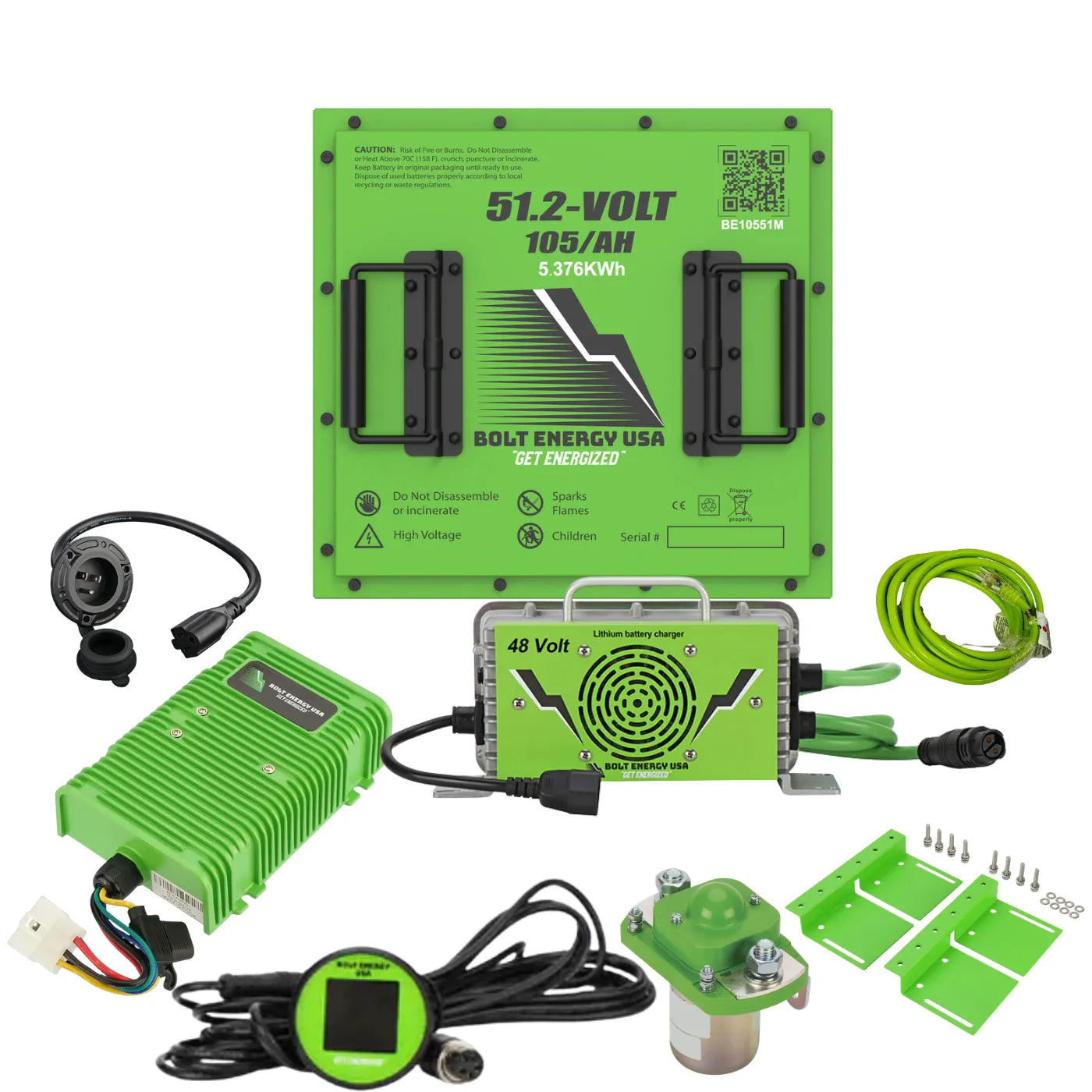
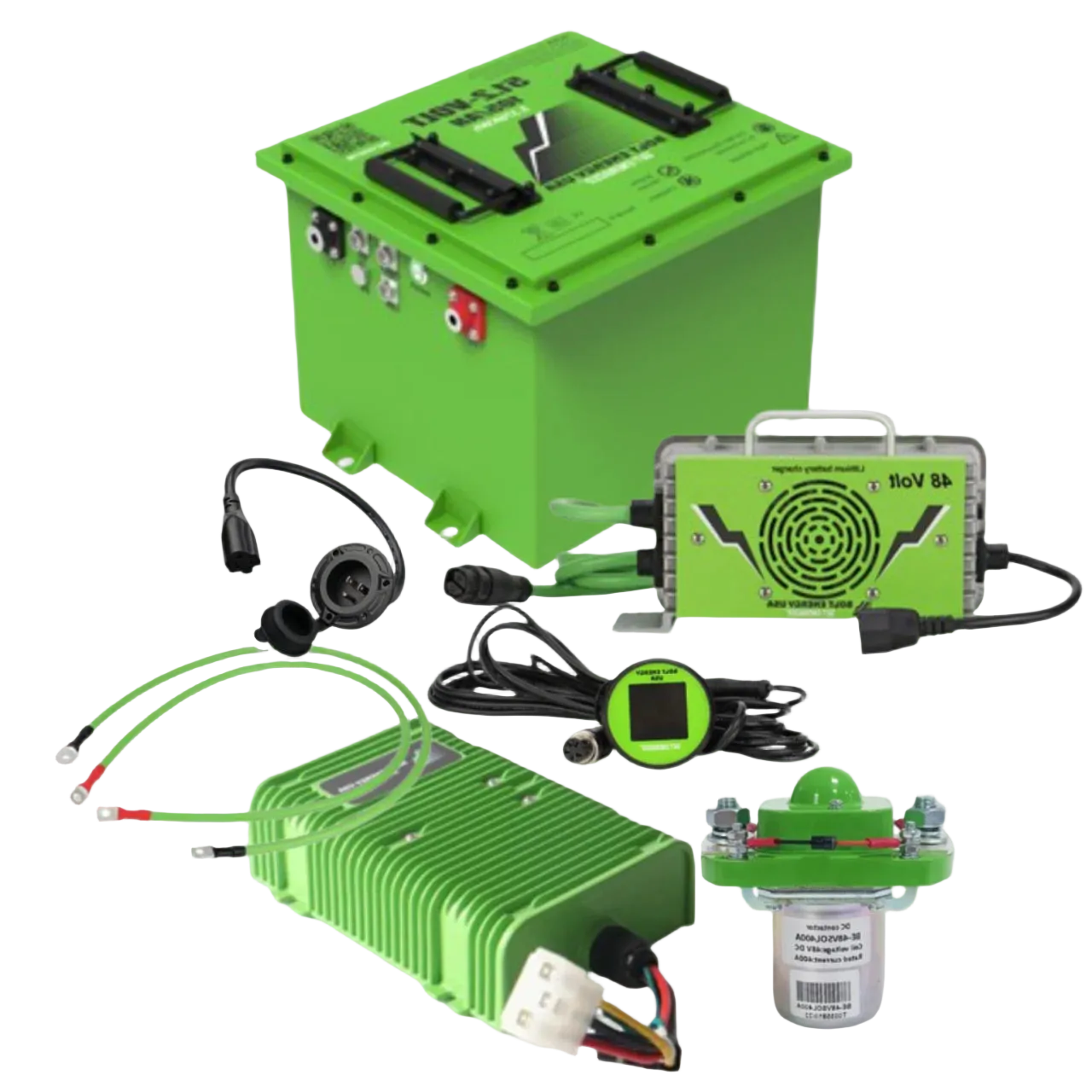
The Professional Kit ships with 14 items including a 400-amp solenoid, 30-amp voltage reducer, mounting bracket, 2AWG installation cables, lighted extension cord, ring terminal connectors, AC hardwire port, and lead battery removal strap. Everything required for installation is included.
Heated Option Available
A version with an integrated self-heating system is available for operators in northern climates. The heater activates automatically when the battery temperature drops below the charging threshold, brings the cells to operating temperature, then shuts off. Discharge specifications are identical to the standard version.
Polaris Ranger EV | Specific Applications
Farm and Ranch Use
Operators using the Ranger EV for daily farm tasks hauling feed, fencing materials, and tools across a property report that the lithium conversion eliminates the mid-week charging stops they needed with aging lead-acid banks. Plugging in each evening is sufficient for most property workloads.
Hunting Access
The Ranger EV is used extensively for quiet hunting access where engine noise would disturb game. The lithium conversion extends the reliable range per charge and removes the concern about a lead-acid bank failing to hold charge after sitting unused since the previous season. Self-discharge below 3 percent per month means a battery charged before the season starts will still be functional weeks later.
Trail and Recreational Riding
Installers confirm the Ranger EV responds noticeably on inclines and in 4WD conditions after the weight reduction. Removing 500-plus pounds from the battery compartment changes how the vehicle handles on varied terrain less mass to carry over obstacles and a more consistent power delivery throughout the charge cycle compared to lead-acid, which loses output voltage as it discharges.
Property Maintenance and Light Hauling
For operators running the Ranger EV at moderate loads payload in the cargo box, two passengers, occasional towing of light equipment the single 105Ah unit provides sufficient continuous discharge current for the Ranger EV's 30HP motor under normal conditions. Experienced installers report typical current draw of 130 to 200 amps on moderate terrain under load, well within the 250-amp continuous BMS rating.
For heavy towing and sustained steep-grade operation: The Polaris Ranger EV motor can approach 350 to 400 amps at full throttle under maximum load on steep grades. Experienced installers recommend running two Bolt Energy 105Ah units in parallel for this type of use, which provides approximately 500 amps of continuous BMS output and doubles total capacity to 210Ah. Alternatively, the 160Ah version is available as a single-unit solution with greater headroom.
What Is in the Professional Kit
51.2V 105Ah LiFePO4 Battery with integrated BMS
Bluetooth receiver for SOC monitoring
Smart SOC state-of-charge dash meter
Waterproof high-speed charger
400A heavy-duty solenoid
30A voltage reducer for 12V accessories
Mounting bracket
2x 40-inch 2AWG installation cables
AC hardwire port with DECO cover plate
15ft 12-AWG lighted extension cord
3/8-inch battery ring terminal connectors
10-inch tie straps
Lead battery removal strap
Detailed installation instructions
Tech Specs
Electrical Specifications
Parameter
Value
Nominal Voltage
51.2V
Working Voltage Range
43.2V – 58.4V
Recommended Operating Voltage
48.0V – 57.0V
Nominal Capacity
105Ah
Total Energy
5,376Wh (5.376kWh)
Capacity at 25A Draw
252 minutes
Efficiency
0.99
Self-Discharge Rate
Less than 3% per month
Cell Chemistry
Prismatic LiFePO4 (Lithium Iron Phosphate)
Cell Configuration
1P16S
Discharge Specifications
Parameter
Value
Maximum Continuous Discharge Current
250A
Peak Discharge Current (30 seconds)
520A +/- 15.6A
BMS Discharge Current Cut-Off (50 seconds)
260A +/- 7.8A
BMS Discharge Voltage Cut-Off
40V
Recommended Low Voltage Disconnect
48.0V
BMS Reconnect Voltage
41.6V
Discharge Temperature Range
-4F to 149F (-20C to 65C)
Charge Specifications
Parameter
Value
Recommended Charge Current
5A – 52A
Maximum Input Current
350A
Charge Current Cut-Off
375A
BMS Charge Voltage Cut-Off
58.5V
BMS Reconnect Voltage (charge)
Less than 58.5V
Charging Temperature Range
34F to 140F (0C to 60C)
Mechanical Specifications
Parameter
Value
Dimensions (L x W x H)
12.8 in x 12.01 in x 10.42 in
Weight
100.8 lbs (45.7 kg)
Terminal Type
M8 x 1.5 x 25mm
Case Material
Powder Coated Steel
Enclosure Protection Rating
IP66
Communication and Monitoring
Parameter
Value
Wireless Monitoring
Bluetooth receiver (included)
Diagnostic Port
CAN port for battery testing
Included Display
Smart SOC state-of-charge meter
Warranty
Parameter
Value
Warranty Period
12 years limited (registration required within 30 days of purchase)
Years 1–6
Manufacturing defects repaired or replaced at no charge
Years 7–12
Prorated replacement at 45% / 60% / 70% of current price
Charger Warranty
2 years from shipment date
Accessories Warranty
1 year (cables, SOC meters, solenoids, voltage reducers)
Transferable
Yes new owner must re-register within 15 days of ownership change
Service Location
Largo, Florida, United States
Manufacturer
Bolt Energy USA a Nivel Family of Brands company
FAQs
Will this battery fit my Polaris Ranger EV without modification?
The 105Ah Mini measures 12.8 inches long by 12.01 inches wide by 10.42 inches tall and installs using the included mounting bracket rather than requiring the battery to fit a specific tray. Professional installers confirm it fits cleanly into the Ranger EV battery compartment. Installation typically takes two to three hours with basic hand tools. Detailed instructions are included in the kit.
Which Polaris Ranger EV model years are compatible?
This battery is compatible with Polaris Ranger EV models from 2010 through 2022. For 2015 and newer models: if you choose to remove the factory DeltaQ onboard charger, you will need to jump two ground wires in the charger molex connector for the vehicle to operate. If you use the Bolt Energy charger included in the kit and leave the factory charger in place, this step is not required. For 2010 through 2014 models, the factory charger can be removed without any additional wiring steps.
Is one 105Ah unit enough for towing and heavy hauling?
For moderate loads two passengers, payload in the cargo box, occasional light towing on flat to moderate terrain a single 105Ah Mini handles normal Ranger EV operation. The BMS is rated at 250 amps continuous, and experienced installers report typical current draw of 130 to 200 amps on moderate terrain under load.
For sustained heavy towing on steep grades, deep mud operation in 4WD, or maximum-rated tow loads on inclines, experienced installers recommend running two units in parallel. This doubles continuous output to approximately 500 amps and doubles capacity to 210Ah. The Ranger EV motor can approach 350 to 400 amps at full throttle under maximum load, which pushes against what a single 105Ah BMS sustains long-term in that specific scenario.
The 160Ah Big version is also available as a single-unit option with greater discharge headroom for heavy-use applications.
How does removing the lead-acid bank affect the Ranger EV's handling?
Removing 500 to 600 pounds of lead-acid batteries from the front battery compartment significantly reduces front-end weight. Owners who have completed this conversion report the front suspension becomes noticeably stiffer as a result, and the vehicle effectively sits higher in the front. For most light to moderate use farm runs, hunting access, general property work this is not a problem.
If you frequently carry heavy loads in the cargo box or operate on rough terrain, the Ranger EV's suspension has adjustable preload that can compensate. Running two 105Ah units in parallel also helps restore some weight distribution compared to a single unit.
Do I need the heated version?
The standard version charges safely between 34F and 140F. If you store and charge your Ranger EV in an environment that regularly drops below 34F an unheated barn, an outdoor equipment shed, or a garage in a cold-weather region the heated version is recommended.
The heated version includes an integrated self-heating system that activates automatically when the battery temperature is below the charging threshold, warms the cells to a safe level, and then shuts off before charging begins. This happens automatically when you plug in. Discharge specifications are identical to the standard version. The heater does not affect the battery's performance during operation, only during charging in cold conditions.
Can I run two Bolt Energy 105Ah units in parallel?
Yes. Two units wired in parallel double total capacity to approximately 210Ah (10.7kWh) and raise combined continuous BMS output to approximately 500 amps, which covers the full range of the Ranger EV motor's demand including peak draw under heavy towing on steep grades.
For parallel operation, use batteries of the same age, charge state, and condition. Each battery manages its own BMS independently, sharing the load between them. Mismatched batteries in a parallel configuration can result in one unit working harder than the other, which shortens the lifespan of the more heavily loaded unit.
If I want to add a second battery later, do I need to buy the full kit again?
No. If you already have the Professional Kit installed, you only need to purchase the battery unit itself for the second unit not a second full kit. The charger, solenoid, voltage reducer, cables, and accessories that came with your first kit are sufficient for a two-battery parallel setup. Contact us when ordering so we can confirm you receive only the battery and any additional cables needed for the parallel connection.
What does the kit include and do I need anything else?
The Professional Kit includes 14 items: the battery, Bluetooth receiver, smart SOC dash meter, waterproof high-speed charger, 400-amp solenoid, 30-amp voltage reducer, mounting bracket, two 40-inch 2AWG installation cables, AC hardwire port with DECO cover plate, 15-foot lighted extension cord, ring terminal connectors, tie straps, a lead battery removal strap, and installation instructions. For most Ranger EV owners, the kit contains everything needed for a complete installation without sourcing additional parts.
How long does installation take?
Community members who have completed this conversion report installation time of two to three hours, with most of that time spent removing the original eight lead-acid batteries. The Bolt Energy kit includes detailed installation instructions and all required hardware. No special electrical knowledge is required beyond basic familiarity with terminal connections. For owners who prefer a professional installation, Bolt Energy has an authorized dealer network contact us for a dealer referral in your area.
How do I monitor the battery's charge level?
The kit includes two monitoring options. The dedicated SOC meter mounts to the dash and displays state of charge at a glance without requiring a phone. The included Bluetooth receiver pairs with a smartphone app and provides additional detail including voltage and real-time status. The battery also includes a CAN port for diagnostic testing by a technician if needed.
What is the warranty and how do I register it?
This battery is covered by a 12-year limited warranty from Bolt Energy USA, serviced in Largo, Florida. Registration is required within 30 days of purchase to activate full 12-year coverage batteries not registered within that window are limited to 2-year coverage.
Coverage breakdown: Years 1 through 6 cover manufacturing defects at no charge. Years 7 through 12 provide a prorated replacement at a percentage of the current price at the time of the claim (45% of current price in years 7 and 8, 60% in years 9 and 10, 70% in years 11 and 12).
The warranty is transferable. If you sell the vehicle, the full remaining warranty period transfers to the new owner, who must re-register the battery and the vehicle serial number within 15 days of the ownership change. The vehicle serial number on the new registration must match the original. If the original owner did not register the battery, transferability does not apply.
The included charger carries a separate 2-year warranty. Cables, SOC meters, solenoids, and voltage reducers carry a 1-year warranty.
To submit a warranty claim, contact us first we will guide you through the process and coordinate with Bolt Energy USA on your behalf at no extra charge. For full warranty terms and registration, see the Warranty tab or contact us.
How does this compare to the Bolt Energy 160Ah Big?
The 105Ah Mini and the 160Ah Big share the same BMS rating (250 amps continuous), the same LiFePO4 chemistry, and the same 12-year warranty. The differences are capacity, dimensions, and price. The 105Ah Mini provides an estimated 40 to 50 miles of range under typical Ranger EV use. The 160Ah Big provides an estimated 60 to 70-plus miles and has more thermal headroom for sustained high-current demands. If your primary use is moderate property work and hunting access, the 105Ah Mini is sufficient. If you regularly run all-day heavy-load operations or want the maximum range buffer, the 160Ah is more appropriate.
Is this battery safe in wet or muddy field conditions?
The enclosure is built to the IP66 standard, which means it is rated for complete dust protection and protection against high-pressure water jets from any direction. This makes it appropriate for field use where the vehicle encounters rain, stream crossings, mud spray, and dirty conditions that would corrode a conventional open-cell lead-acid battery over time. The powder-coated steel case also resists impact and abrasion better than plastic housings.
Compatibility
The information below is provided as a general reference based on installer experience and manufacturer documentation. Always verify dimensions and electrical specifications against your specific vehicle before purchasing. Contact us if you are unsure whether this battery is appropriate for your application.
Confirmed Polaris Ranger EV Models
Model
Year Range
Notes
Polaris Ranger EV
2010 – 2014
Stock charger can be fully removed. Straightforward installation.
Polaris Ranger EV
2015 – 2019
If removing the factory DeltaQ charger, jump two ground wires in the charger molex connector. Not required if using the included Bolt charger.
Polaris Ranger EV
2020 – 2022
Same wiring note as 2015–2019 applies if factory charger is removed.
Voltage compatibility: This battery nominally operates at 51.2V with a working range of 43.2V to 58.4V. It is designed for vehicles with a recommended operating voltage of 48V to 57V. Do not install in vehicles requiring a true 48V flat nominal voltage without confirming the vehicle's controller tolerates the 51.2V nominal. The Polaris Ranger EV's AC motor controller accepts this voltage range without issue.